
Every few years someone publishes a "Is Joomla dead?" article. I've been reading them for over a decade. Meanwhile, I'm still building on Joomla. Still hosting it. Still developing extensions for it. So let me tell you why - and what that actually looks like in practice.
First, a bit of honesty
I'm not going to pretend Joomla is perfect. The learning curve is real. The community is smaller than WordPress. If you want a blog up in an afternoon with a pretty theme, WordPress or Squarespace will get you there faster.
But if you're building something more serious - a site that needs proper user access levels, multilingual support out of the box, a clean separation between content and presentation, and a framework you can actually extend without it turning into a plugin nightmare - Joomla starts to look a lot more interesting.
What keeps me on Joomla isn't nostalgia. It's that the core is genuinely well-architected. Native user groups and access control, built-in multilingual support, a solid MVC framework - these aren't bolt-ons. They're baked in. When I'm scoping a complex site for a client, I'm not asking "can Joomla do this?" I already know the answer.
So where do extensions come in?
Joomla's core gets you a long way. But there are gaps - specific functionality that most sites don't need but some sites absolutely do. That's where I started building TDC Lab extensions. Not to bloat a site with features nobody asked for, but to solve specific problems I kept running into with clients.
Here's what that looks like in the real world.
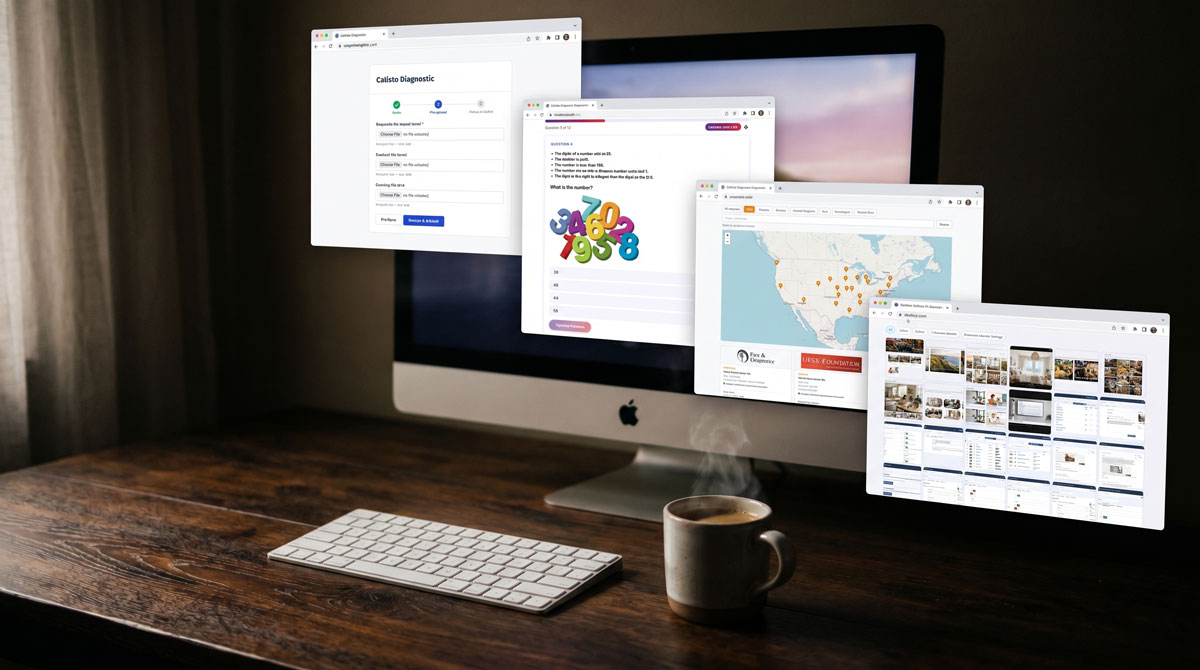
QuizLab Pro started because I needed an interactive quiz system for an educational maths site aimed at primary school kids. Nothing in the Joomla ecosystem quite hit the mark - too complex, too enterprise-y, or just not built with young learners in mind. So I built it. QuizLab Pro lets you create structured quizzes with custom scoring, feedback, and a clean interface that doesn't overwhelm a ten-year-old trying to practice their times tables. It's now one of the most capable quiz extensions in the Joomla ecosystem.
PostBox Pro is a form and submission management extension, and the use case that pushed it furthest was a client in the electrical testing equipment space. Their customers needed to upload diagnostic files - specific technical documents tied to their equipment. We integrated PostBox Pro with Microsoft SharePoint via the Microsoft Graph API, so submissions from the Joomla front end land directly in the client's SharePoint environment. Clean, secure, and completely transparent to the end user. That kind of integration would have been a painful custom build without a solid form framework underneath it.
MapLab Pro came out of a client who manages over 100 agents worldwide. They needed a map directory - something that could display all those locations, handle filtering, and be managed without a developer every time a new agent came on board. MapLab Pro does exactly that. Interactive maps, custom markers, filterable listings, and a back-end that their team can actually use. It scales, it's fast, and it doesn't require a geography degree to administer.
GalleryLab Pro is the one I can point to most literally - it runs the galleries right here on this site. I wanted a gallery extension that gave me proper control over layout, lightbox behaviour, and image management without the overhead of a plugin that's trying to do seventeen other things at the same time. GalleryLab Pro is focused. It does galleries, and it does them well.
The common thread
None of these extensions try to be everything. That's intentional. One of the things I genuinely like about Joomla's philosophy is that it doesn't force you to install a 4MB plugin just to get one feature you need. The TDC Lab extensions are built the same way - lightweight, purposeful, and built to work with Joomla rather than around it.
If you're evaluating CMS platforms for a project with real complexity - user management, integrations, custom workflows - I'd encourage you to give Joomla a serious look before defaulting to WordPress. And if you find yourself needing quizzes, maps, galleries, or flexible form handling, the extensions are there when you need them.
Joomla isn't dead. It's just not loud about it.